
Newsletter
Join the Community
Subscribe to our newsletter for the latest news and updates
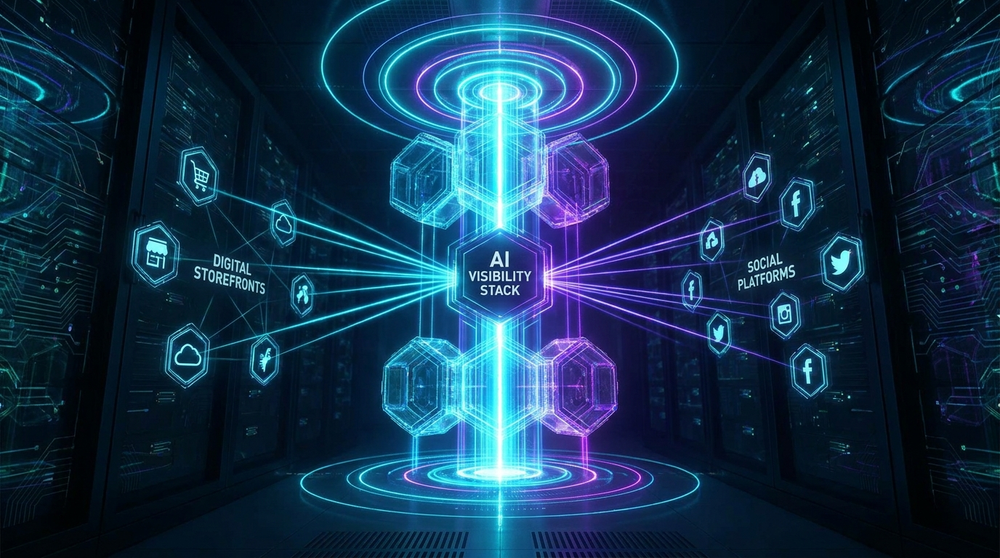
With AI agents increasingly handling the discovery phase, your 2026 visibility depends on specialized tools. We review the essential 'AI Visibility Stack' to help you win the discovery game and scale to your first 100 customers.
2026/05/31
To build the 2026 'AI Visibility Stack', our team audited over 50 platforms focused on visibility, automated discovery, and acquisition. We tested these tools based on three criteria: AI-Readiness (how well they signal to AI agents), Speed-to-Market (ease of deployment), and Conversion Efficiency (moving from lead to first 100 users). Here are our top picks for May 2026.
The Brain of the Visibility Stack
As the core engine for high-volume agentic tasks, Gemini 3.1 Flash is our top choice for businesses running real-time SEO audits and AI content pipelines. Its low latency ensures that your content is indexed and analyzed by external AI crawlers almost instantly.
Conversion & Retargeting at the Edge
Visibility is useless without engagement. LinkDrip allows you to add custom CTA overlays on every link you share, effectively turning every external piece of content you distribute into a lead generator for your eCommerce brand.
The 'First 100 Users' Catalyst
For Micro-SaaS and eCommerce founders, getting past the zero-user mark is the hardest hurdle. LaunchTry provides a structured environment to launch and grow without a massive marketing budget, focusing on community-led growth.
Automated Requirement Engineering
In a competitive market, product-market fit requires rapid iteration. ProductFrame AI automates the generation of PRDs and requirement tracking, ensuring that your feature set matches what your users (and AI agents) are searching for.
| Tool | Primary Use | Visibility Type | Best For |
|---|---|---|---|
| Gemini 3.1 Flash | Processing Power | AI Agent Discovery | Automated Scalability |
| LinkDrip | Engagement | CTA Overlays | Content Marketers |
| LaunchTry | Early Growth | Community Launch | Solo Founders |
| ProductFrame AI | Infrastructure | PRD Automation | Product Managers |
The 2026 eCommerce landscape is shifting from 'Search Engine Optimization' to 'AI Agent Optimization'. By combining the speed of Gemini 3.1 Flash with the strategic growth of LaunchTry and the engagement power of LinkDrip, you build a resilient visibility stack that anticipates market trends rather than chasing them.
Discover more strategies in our curated 2026 eCommerce Reset Essentials.