Newsletter
Join the Community
Subscribe to our newsletter for the latest news and updates

A critical analysis of how AI-aided 'vibecoding' is impacting the quality of project showcases and technical community discussions on Hacker News.
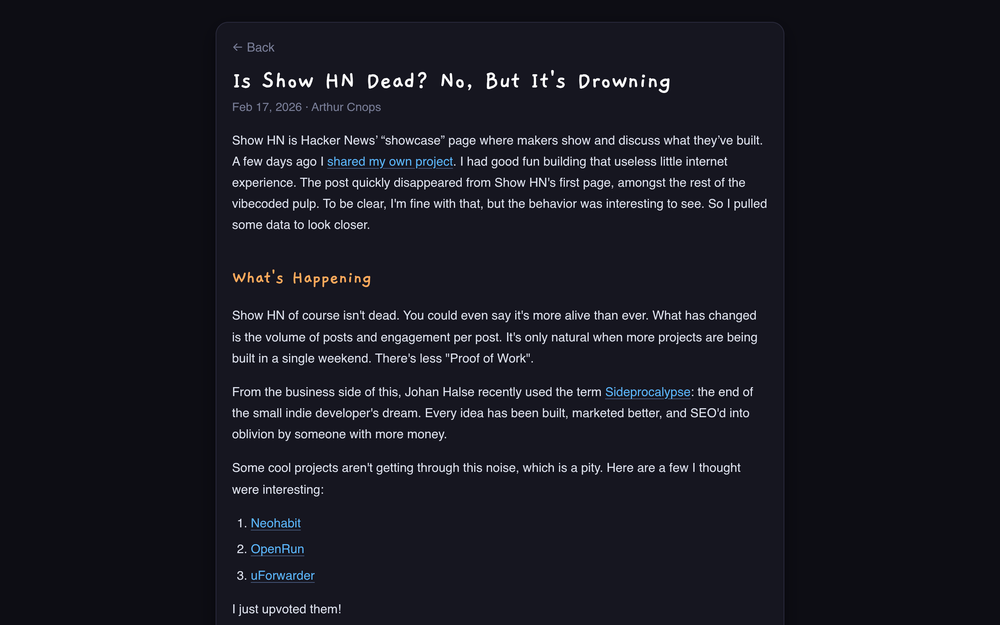
In the thought-provoking article "Is Show HN dead? No, but it's drowning," technologist Arthur Cnops delivers a profound critique of how generative AI is reshaping the most prestigious project showcase in the developer world. As AI-assisted development—or "vibecoding"—becomes the new norm, the barriers to entry for software creation have vanished, but at a hidden cost to community value and technical depth.
This analysis is more than just a critique of a forum; it is an exploration of the future of software engineering as a craft. It challenges developers to consider what "earned" code looks like in a post-AI world and how to maintain the spirit of learning and deep technical exchange. Whether you are a seasoned engineer or a new developer using AI tools, this piece offers essential perspectives on maintaining quality, substance, and soul in your public technical work. By understanding the shift from deep problem-solving to rapid prototyping, readers can better navigate the transition of the software landscape.