
Newsletter
Join the Community
Subscribe to our newsletter for the latest news and updates
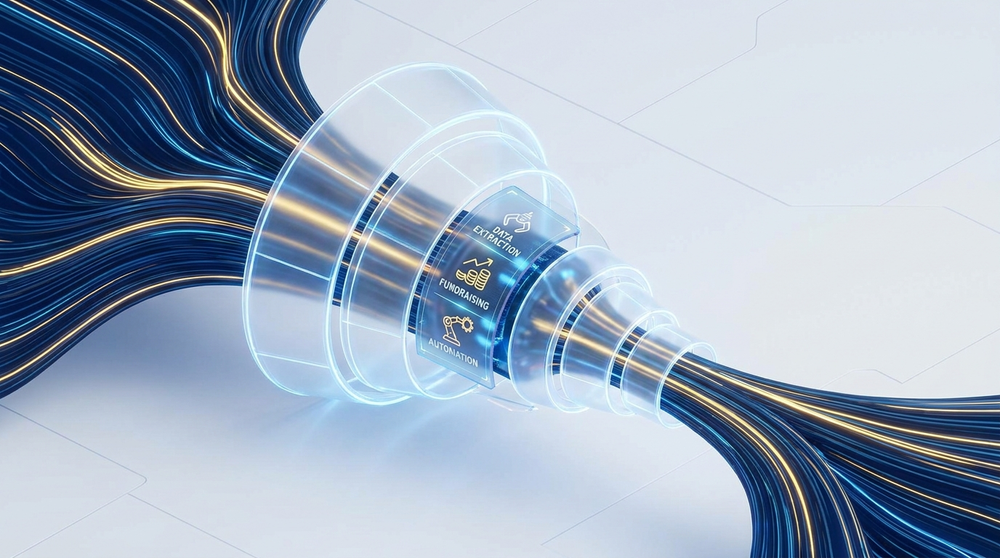
As AI agents begin to compress the traditional marketing funnel, we review the top tools enabling 'Agentic Commerce' and autonomous workflows for 2026.
2026/07/12
To identify the tools truly capable of surviving the shift toward Agentic Commerce, we put these solutions through our 'Autonomous Friction Test'. We evaluated each tool based on its API responsiveness, privacy-first architecture, and its ability to execute complex tasks with minimal human oversight. In a world where 20% of consumers now rely entirely on AI recommendations, these tools represent the new gold standard for digital infrastructure.
In the age of 'Vibe Coding', your first impression with investors needs to be data-driven and instantaneous. StartupCorners allows you to build an AI-powered profile in two minutes that tracks investor engagement with surgical precision.
If AI agents are compressing the funnel, DigiStorms is the engine driving the compression. It acts as an AI onboarding agent for SaaS, tracking user behavior and sending hyper-personalized emails to convert free users into paying customers while you sleep.
As AI 'slop' floods the web, high-quality data becomes the ultimate currency. ParseHawk provides a 100% local document AI platform, ensuring that your sensitive business intelligence never leaves your hardware.
Traditional Git is built for humans; Oak is built for AI agents. It provides a simplified and optimized version control system designed specifically for autonomous workflows, preventing the 'merge hell' often associated with multi-agent coding projects.
| Tool | Primary Use | Privacy Level | Pricing Model |
|---|---|---|---|
| StartupCorners | Fundraising | High (Tracking) | Free |
| DigiStorms | SaaS Conversion | Medium (Cloud-based) | Pro |
| ParseHawk | Data Extraction | Maximum (Local) | Basic |
| Oak | AI Development | High | Free |
The 2026 digital landscape is no longer about reaching people—it's about reaching their agents. Whether you are fundraising with StartupCorners or securing your data with ParseHawk, your stack must be agent-ready.
Ready to upgrade your entire workflow? Explore our full 2026 Founder Essentials collection to stay ahead of the curve.