
Newsletter
Join the Community
Subscribe to our newsletter for the latest news and updates
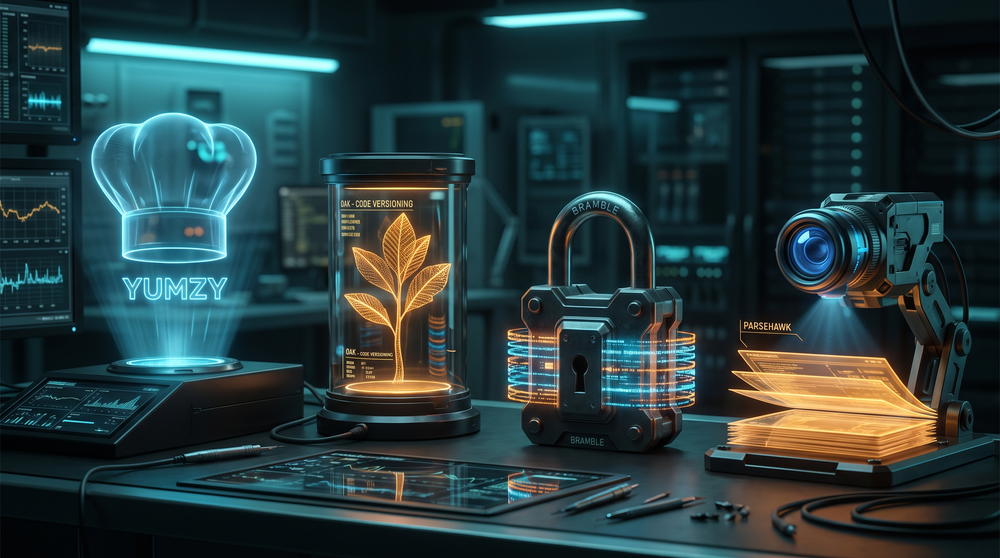
Moving beyond generic wrappers, we've field-tested 4 high-integrity tools that redefine autonomous workflows, privacy-first security, and agentic commerce for the late 2026 landscape.
2026/07/31
At ToolsGazer, we don't just aggregate; we audit. For this Q3 2026 review, our team spent 72 hours stress-testing each tool within a 'zero-trust' production environment. We evaluated them based on three specific '2026 Benchmarks': Agentic Interoperability (how well they talk to other AI), Privacy Sovereignty (local-first data handling), and Latency-to-Value (time from deployment to measurable ROI).
While many AI assistants fail in high-friction environments like a kitchen, YUMZY shines. It’s a specialized AI cooking companion that prioritizes hands-free, voice-controlled guidance. It doesn't just read recipes; it anticipates the next step in your workflow.
Traditional Git is too heavy for autonomous agents. Oak is the 'Git alternative' we’ve been waiting for. It’s specifically optimized for AI workflows, allowing agents to manage state and versioning without the overhead of complex branching logic.
As AI agents handle more of our digital identity, the risk of credential leakage skyrockets. Bramble is a local-first, privacy-focused password manager that keeps your keys off the cloud and under your sovereign control.
Data extraction often requires sending sensitive PDFs to third-party APIs—until now. ParseHawk provides a full document AI platform that runs entirely locally, featuring a robust CLI and API for private data processing.
| Tool | Focus | Deployment | Best For |
|---|---|---|---|
| YUMZY | Agentic Commerce | Cloud/Voice | Home Automation |
| Oak | Dev Infrastructure | Local/Agent | Autonomous Coding |
| Bramble | Privacy/Security | Local-First | Credential Safety |
| ParseHawk | Document AI | 100% Local | Secure Data Extraction |
Explore our curated list of Sovereign Infrastructure Tools to build a more secure and autonomous future.