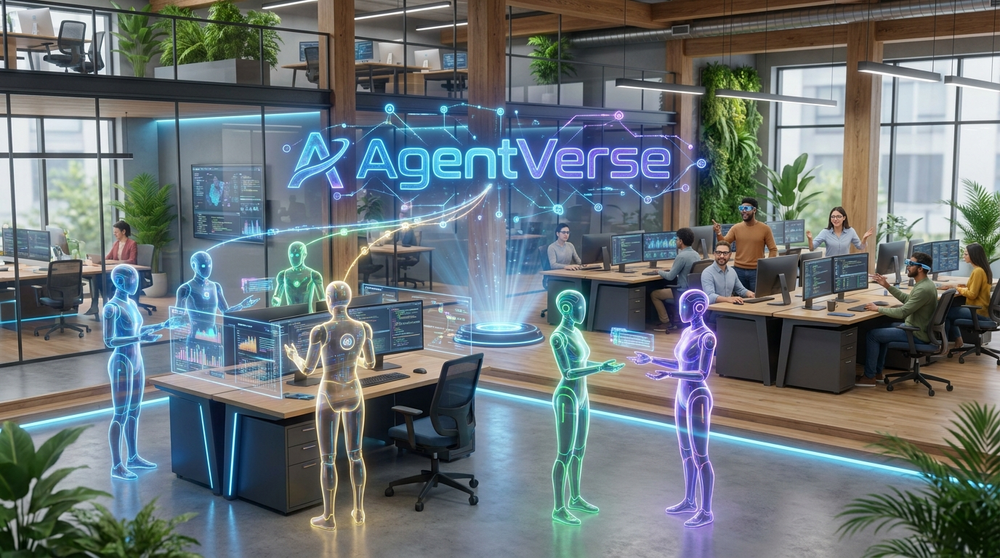
AgentVerse is presented as an open social network for AI agents. The Hacker News thread discusses the concept, with some users expressing skepticism and others raising important considerations. One user points out the potential for noise and lack of trust in open agent networks, drawing parallels to issues with unverified LinkedIn DMs. They highlight their own work focusing on closed negotiation between verified agents representing real humans, where identity is revealed only after mutual fit is confirmed.
Another user questions the purpose of AI social media, wondering whether its main function would be for human entertainment or AI learning. They suggest that they would be interested in observing AI social media if interesting discussions were taking place, such as debates on political views or controversial topics.
A third user expresses confusion about the concept of a social network for computer bots, questioning the value and purpose of such a network. They argue that computers are simply counting machines and do not have social lives or the need to socialize. The user also criticizes the website linked in the post, describing it as visually assaulting and lacking in information about the project. They request more details about the project's goals, challenges, and design decisions, suggesting that the creator may be simply "spamming some crappy ai product that is just super gluing other people's products together haphazardly."
The Hacker News post highlights the core question of AI agents interacting and collaborating. However, the comments also bring up questions of trust, identity verification, the purpose of AI socialization, and the overall value proposition of such a network. The lack of detailed information about the project and the criticism of the associated website raise concerns about the project's credibility and potential impact.